Introduction to Chardham Yatra From Haridwar
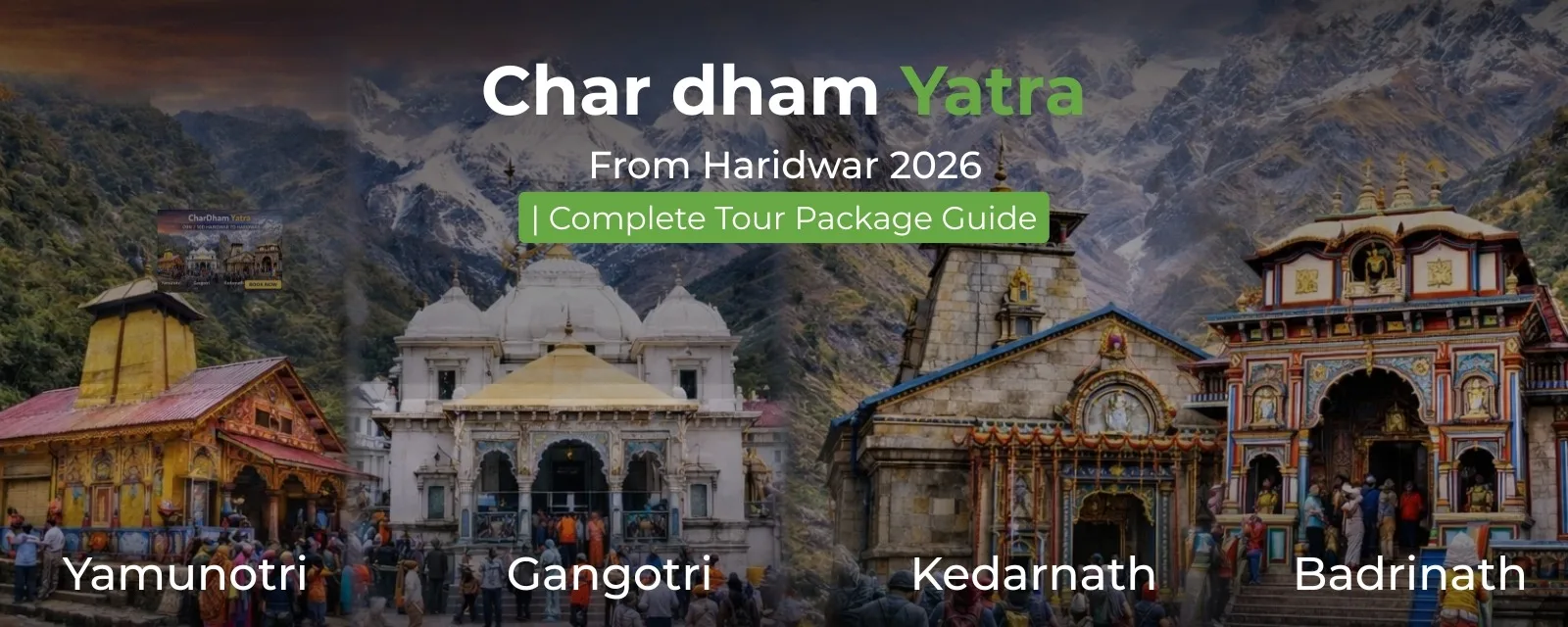
The Char Dham Yatra from Haridwar is one of the most respected pilgrimage journeys in northern India. Every year thousands of devotees travel to Uttarakhand to visit the four sacred temples — Yamunotri, Gangotri, Kedarnath and Badrinath. These temples are located in the Garhwal Himalayas and together form the Char Dham circuit.
Most pilgrims begin the Haridwar to Char Dham Yatra because Haridwar serves as the main gateway to the Himalayan pilgrimage routes. The city is well connected by road and rail, making it a convenient starting point for travellers coming from different parts of the country.
A complete Char Dham Yatra package from Haridwar usually takes around 10 to 12 days. During this journey travellers pass through several mountain towns, river valleys and traditional pilgrimage stops before reaching the temples. Proper travel planning helps pilgrims complete the yatra comfortably while enjoying the scenic Himalayan landscape.
Why Haridwar is the Primary Starting Point for Char Dham Yatra
Haridwar has traditionally been the starting point for the Char Dham pilgrimage. The city holds strong religious significance in Hindu culture and is one of the seven sacred cities mentioned in ancient texts.
Before starting the Haridwar to Char Dham Yatra, many pilgrims visit Har Ki Pauri to take a holy dip in the Ganga River. This ritual is believed to purify the soul before beginning the journey toward the Himalayan temples.
Apart from its religious importance, Haridwar is also a practical starting point. The city offers good transport connectivity to Uttarakhand’s mountain regions. From here, travellers can easily reach towns such as Rishikesh, Barkot, Uttarkashi, Guptkashi and Joshimath, which lie along the Char Dham route.
Travel facilities such as hotels, transportation services and organized Char Dham tour package from Haridwar options are widely available, making it easier for pilgrims to plan their journey.
The Four Char Dham Temples — What to Actually Expect
Yamunotri
Yamunotri is the first stop and the highest-altitude one at 3,293 metres. The temple honours Goddess Yamuna — this is where the river originates, technically from the Champasar Glacier just above. You cannot drive to the temple. From Janki Chatti or Phool Chatti (your overnight base), it is a 6 kilometre uphill trek. Not brutal, but it is your first day at altitude after climbing, so do not rush it.
The hot springs near the temple — Surya Kund and Divya Shila — are genuinely interesting. The water in Surya Kund is hot enough that pilgrims cook rice in cotton pouches to offer at the temple. It sounds unusual, but it is one of those things that sticks in your memory.
Gangotri
Gangotri sits at 3,415 metres and is, in practical terms, the most accessible of the four. The road goes all the way to the temple town. No trek required, which means it tends to feel less of an ordeal and more of a straightforward visit. The temple sits beside the Bhagirathi river — the Ganga at its origin is shockingly clear and cold here, nothing like the river you see downstream.
If your itinerary has a spare half-day and you are reasonably fit, the trail to Gaumukh glacier (19 km further, permit required) is worth considering. Most group tours skip it, but if you have done your research on the Gangotri Yatra from Haridwar, you will know it is a separate experience entirely.
Kedarnath
Kedarnath is the one everyone talks about and the one that demands the most from you physically. Located at 3,583 metres in the Rudraprayag district, this is a Jyotirlinga — among the most sacred Shiva shrines in the subcontinent. The footfall during season is enormous and for good reason.
The trek from Gaurikund is 16 kilometres one way. On a good day with a reasonable pace, it takes 5 to 7 hours going up. The trail is well defined and has dhabas and rest stops along the way, but the altitude is real. Ponies, palki (doli) and helicopter services are all available from Gaurikund. If you are booking helicopter, do it at least 3 to 4 weeks before your travel date during peak season — it is that competitive.
Badrinath
Badrinath is the final dham and, in terms of access, the most forgiving. At 3,133 metres in the Chamoli district, the temple sits directly on the road. You drive up, park, walk to the gates. The Tapt Kund hot spring just below the temple is where pilgrims bathe before darshan — the water is warm even in early May when the air is cold enough to see your breath.
Do not leave Badrinath without going to Mana Village, 3 kilometres ahead. It is officially the last Indian village before the Tibet border. The cave associated with sage Vyas, the natural rock bridge called Bhim Pul over the Saraswati river — small things, but they make the day feel complete.
Char Dham Temple Opening Dates 2026 — What We Know So Far
Here is the honest answer: exact dates are not fixed yet. Opening days are announced on Basant Panchami each year following astrological calculations. That said, the pattern over the last several years has been consistent enough to plan around:
Opening Dates of Chardham Yatra for 2026
- Yamunotri: Opens on Akshaya Tritiya — 19 April 2026
- Gangotri: Also opens on Akshaya Tritiya — 19 April 2026
- Kedarnath: Usually 3 to 5 days after Gangotri — 22 April 2026
- Badrinath: Opens within a week of Kedarnath — 23 April 2026
Closing Dates of Chardham Yatra for 2026
- Yamunotri: October 2026 (Tentative)
- Gangotri: October 2026 (Tentative)
- Kedarnath: October 2026 (Tentative)
- Badrinath: November 2026 (Tentative)
Haridwar to Char Dham Distance — The Numbers You Need
These are approximate road distances from Haridwar. I say approximate because mountain routes change — new bypasses open, old roads get blocked and GPS apps sometimes suggest routes that are technically shorter but far slower.
- Haridwar to Yamunotri: ~220 km to Janki Chatti/Phool Chatti (trek base). Drive time: 7 to 8 hours.
- Haridwar to Gangotri: ~265 km. Drive time: 8 to 9 hours from Haridwar.
- Haridwar to Kedarnath: ~250 km to Gaurikund (trek base). Drive time: 7 to 8 hours.
- Haridwar to Badrinath: ~320 km. Drive time: 9 to 10 hours, longer with traffic.
Total circuit (road only, Haridwar to Haridwar): 1,500 to 1,600 km. Add 32 km for the Kedarnath trek and 12 km for Yamunotri. This is why 12 days is the standard duration and anything shorter starts to feel rushed.
Haridwar to Char Dham Yatra Route — The Full Picture
The traditional sequence is west to east: Yamunotri first, Badrinath last. This is not arbitrary — the route flows naturally in this direction without major backtracking. Here is the standard Char Dham route map from Haridwar:
- Haridwar → Rishikesh → Barkot/Phool Chatti (Yamunotri base)
- Phool Chatti → Uttarkashi (Gangotri base)
- Uttarkashi → Guptakashi/Sitapur (Kedarnath base)
- Guptakashi → Gaurikund → Kedarnath (trek)
- Gaurikund → Joshimath/Pipalkoti → Badrinath
- Badrinath → Rudraprayag → Devprayag → Haridwar (return)
A few towns on this route are worth knowing — not just as fuel stops, but as places. Devprayag, where the Alaknanda and Bhagirathi rivers merge to officially become the Ganga, is striking if you have 20 minutes to walk to the confluence. Rudraprayag is a good overnight halt. Joshimath, close to Badrinath, has decent accommodation and is the launch point for Auli ski resort if anyone in your group wants a detour.
How to Travel — Options for Every Budget and Group Size
Chardham Yatra from Haridwar By Road (General)
The vast majority of pilgrims travel by road and the infrastructure has genuinely improved in recent years. The Char Dham Mahamarg Pariyojana has been widening key stretches of the highway for the better part of a decade. Some sections are still single-lane and prone to congestion, particularly near Sonprayag (before Gaurikund) and Lambagad (near Badrinath). Leave early each morning — before 7 am if possible. The difference in travel time between a 6 am start and an 8 am start on these roads can be two hours.
Chardham Yatra from Haridwar by Car
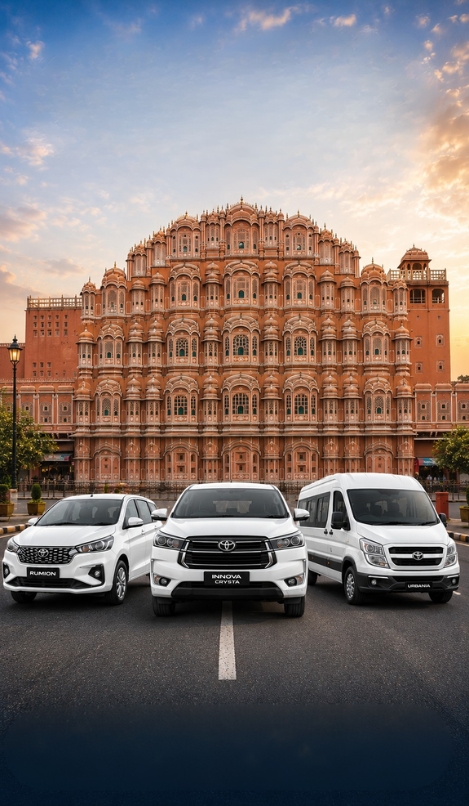
Private car is the most comfortable option for families and small groups. The Innova Crysta is the workhorse of Uttarakhand mountain tourism — reliable, spacious enough for four adults with luggage and driven by people who know these roads well. Ertiga works for lighter groups. A Char Dham Yatra taxi from Haridwar package typically covers the driver, vehicle, fuel and tolls for the entire 12 days. Confirm that before you book — some operators charge fuel separately and the bill adds up.
Chardham Yatra from Haridwar by Bus
UTC (Uttarakhand Transport Corporation) buses connect Haridwar to the key towns on the route — Uttarkashi, Barkot, Rudraprayag, Ukhimath, Joshimath. Fares are a fraction of private taxis. The catch is connections. You will change buses at intermediate points, follow fixed schedules and spend longer in transit. For a solo traveller on a tight budget who is comfortable with uncertainty, it works. For groups, families with elderly members or anyone who values predictability, private transport is the better investment.
Haridwar to Char Dham Yatra by Tempo Traveller
For groups of 8 to 12 people, a Tempo Traveller is frequently the most sensible choice. Per-head cost is significantly lower than booking multiple SUVs and you all travel together — no convoy coordination issues, no one getting separated at stops. The standard versions have bench seating, which is fine for shorter legs. For 12 days of mountain driving, pay a bit more for the deluxe or push-back seat version. Your back will be grateful by day six.
Haridwar to Char Dham Yatra by Tempo Traveller packages are widely available from operators in Haridwar. Compare at least two or three, check whether the vehicle has a permit for hill routes and verify driver experience on this specific circuit. An experienced driver who knows where to refuel, where to stop for good food and how to handle mountain traffic is worth paying for.
Haridwar to Char Dham Yatra by Urbania
The Force Urbania has been gaining ground on Tempo Travellers for group pilgrimages over the last two or three years. It seats 10 to 13 people, has wider individual seats, significantly better suspension and air conditioning that holds up at altitude. If you have done a long journey in a standard Tempo Traveller, you know how uncomfortable the last few days can get. The Urbania genuinely addresses that.
Haridwar to Char Dham Yatra by Urbania is priced as a premium option — you will pay more per seat than a Tempo Traveller. Whether it is worth it depends on your group. For a family pilgrimage with grandparents or people with joint issues, it probably is. For a group of fit young adults comfortable with basic conditions, it may not be necessary.
12-Day Char Dham Yatra Itinerary from Haridwar — Day by Day
This is a realistic plan, not an optimistic one. Buffer days are built in where the terrain demands it. Timings assume early starts and no major road disruptions.
Day 1 — Haridwar: Arrive, check in, rest. Attend Ganga Aarti at Har Ki Pauri (usually 6 to 7 pm). Dinner near the ghats. Early night — 5 am start tomorrow.
Day 2 — Haridwar to Phool Chatti (220 km): Long drive through Rishikesh, Chamba, Barkot. 7 to 8 hours with stops. Check into your base for Yamunotri. Rest.
Day 3 — Yamunotri: Start trek by 7 am. 6 km up to the temple, darshan, visit hot springs. Return trek by early afternoon. Overnight at Phool Chatti.
Day 4 — Phool Chatti to Uttarkashi (~100 km): Shorter drive, around 3 hours. Uttarkashi is a proper town — use the evening to eat a good meal, rest up for Gangotri.
Day 5 — Gangotri (100 km from Uttarkashi): Drive up in the morning, darshan, spend a couple of hours at the temple and riverside, drive back to Uttarkashi. Long but doable day.
Day 6 — Uttarkashi to Guptakashi (~200 km): The longest road day on the circuit. Starts easy, gets slower closer to Rudraprayag. Arrive by evening. Overnight at Guptakashi or Sitapur.
Day 7 — Kedarnath (trek day): Drive from Guptakashi to Gaurikund (30 km), then begin the 16 km trek. Pace yourself. Arrive at Kedarnath by afternoon. Evening darshan. Overnight at the top.
Day 8 — Return from Kedarnath: Morning darshan again. Trek back down to Gaurikund. Drive to Rudraprayag or Pipalkoti.
Day 9 — Badrinath (~100 km from Pipalkoti): Drive via Chamoli and Joshimath. Reach Badrinath mid-afternoon. Check in. Evening darshan, Tapt Kund dip.
Day 10 — Full Day at Badrinath: Morning darshan early. Visit Mana Village after breakfast — Vyas Gufa, Bhim Pul, Vasudhara Falls if you are up for the walk. Afternoon rest.
Day 11 — Badrinath to Devprayag (~230 km): Return journey begins. Long drive. Overnight at Devprayag or Rishikesh.
Day 12 — Return to Haridwar: Short final drive. Yatra complete.
Char Dham Tour Package from Haridwar — Cost Breakdown
Package pricing depends on three things: vehicle type, hotel category and group size. Here is what the market actually looks like in 2026:
- Budget Char Dham Yatra: Rs. 15,000 to Rs. 22,000 per person. Shared transport (bus or shared cab), basic guesthouses with common bathrooms in some cases, no tour manager. Works if you are flexible and travel-experienced.
- Standard Package: Rs. 25,000 to Rs. 40,000 per person. Private vehicle, mid-range hotels with attached bathrooms, some meals included. This is the most popular category for family pilgrimages.
- Premium Package: Rs. 45,000 to Rs. 65,000+ per person. Better hotels, private SUV or Urbania, Kedarnath helicopter transfer included. For travellers who want comfort and no logistical surprises.
Most Char Dham tour packages from Haridwar include vehicle, driver, accommodation and parking/toll charges. What they usually do not include: helicopter tickets (charged separately), porter or pony charges at Kedarnath, personal expenses and entry fees at some sites. Read the exclusions list before you sign. Some operators advertise low headline prices and then add these costs on top.
Haridwar to Kedarnath Badrinath — The Do Dham Option
Many people have 7 to 8 days and not 12. The most popular short version is combining only Kedarnath and Badrinath — the two most visited shrines on the circuit. The Haridwar to Kedarnath Badrinath tour is practical, covers the two most significant dhams for most devotees and fits comfortably in a week.
Kedarnath Yatra from Haridwar follows the route through Rishikesh, Devprayag, Rudraprayag and Guptakashi to Gaurikund. The 16 km trek is the main physical challenge. Give yourself a full day going up and another coming down, with an overnight at Kedarnath between them. The Badrinath Yatra from Haridwar is then a drive via Joshimath — temple is on the road, no trek involved.
Practical Tips That Actually Make a Difference
Register in advance: The Uttarakhand government requires yatra registration through the official Devasthanam Board portal. Checkpoints on the route verify it. This is not optional and not something to do last minute.
Book Kedarnath helicopter early: During May and June, slots fill weeks ahead. Waiting until you arrive in Gaurikund and hoping for a cancellation is a bad strategy.
Pack layers, not just warm clothes: Temperature at Kedarnath or Badrinath can swing 15 degrees between midday and evening. A base layer, mid layer and a windproof outer jacket covers most situations. Cotton kills at altitude — wool or synthetic base layers only.
Take cash: ATMs exist in Uttarkashi, Guptakashi, Rudraprayag and Joshimath. They routinely run dry in peak season. Carry enough cash for at least two to three days at any point in the trip.
Do not ignore altitude: This sounds obvious until it happens to you. Headache, breathlessness, nausea at 3,500 metres is not weakness — it is physiology. Slow down, hydrate, eat light. If symptoms worsen, descend. There are medical posts at Kedarnath and near Badrinath.
Carry your medications and a small first aid kit: ORS sachets, paracetamol, antacid and a basic bandage cover most minor issues. If you take prescription medicines, carry enough for the full trip plus two extra days.
Leave before 7 am each driving day: This applies especially near Sonprayag and on the Badrinath highway past Chamoli. Early starts often cut 90 minutes off travel time compared to mid-morning departures.
Have a contingency plan for Day 7: If there is a landslide or road block on your scheduled Kedarnath day, what is your buffer? Build one extra day into your itinerary if the budget allows.
Why Choose Raj Travels for Char Dham Yatra from Haridwar
Planning the Char Dham Yatra from Haridwar requires reliable transportation and experienced drivers familiar with Himalayan routes. Many pilgrims prefer organized travel services to ensure a smooth journey through the mountains. Raj Travels provides well-maintained vehicles and practical travel support that helps pilgrims complete the yatra comfortably.
Key reasons travellers choose this service:
- Experienced drivers familiar with Char Dham routes
- Well-maintained cars and tempo travellers for mountain travel
- Flexible travel options for families and groups
- Comfortable vehicles suitable for long-distance journeys
- Assistance with planning the Haridwar to Char Dham travel route
- Reliable transport during the entire pilgrimage journey
Final Word
The Char Dham Yatra from Haridwar is a demanding trip. Not just physically the organization, the timing, the daily logistics it all requires attention. But it is also one of the more extraordinary things you can do in India. The landscapes alone — river valleys, glaciers, temples that have stood at these altitudes for centuries are worth the effort regardless of your reasons for going.
For 2026, start planning by January at the latest. Book accommodation and transport well before the season opens in late April. Check the official temple opening dates once they are announced. Give yourself 12 days if you can. And if the budget allows, pay a little more for a comfortable vehicle — you will not regret it by day nine. The Char Dham Yatra package from Haridwar you book is the foundation of the whole experience. Get that part right and the rest follows.
Frequently Asked Questions (FAQs)
May and June work best for most people — temples are open, roads are clear and the weather, while cold at altitude, is manageable. Late September and October are also excellent: fewer crowds, crisp air and the mountains are sharp after monsoon. Avoid July and August unless you enjoy the uncertainty of landslide-prone roads and sudden trail closures.
Twelve days is the honest answer for a comfortable trip. Ten days is possible if nothing goes wrong. Nine or fewer starts to feel like a race through sacred places you have waited years to visit. Factor in the Kedarnath trek (a full day up, a day back) and the Yamunotri trek and the maths does not work in favour of rushing.
Yes and non-negotiably so. The Uttarakhand government requires all Char Dham pilgrims to register online through the Devasthanam Board portal before travel. Checkpoints at multiple points on the route check your registration details. It takes about 15 minutes to complete online. Do it at least a week before you depart.
Yamunotri base (Phool Chatti) is around 220 km. Gangotri is roughly 265 km. Kedarnath base (Gaurikund) is about 250 km. Badrinath is approximately 320 km. Total for the full circuit from Haridwar and back is 1,500 to 1,600 km by road, before accounting for the two treks.
Yes, with the right planning. Kedarnath helicopter removes the hardest physical challenge. Ponies and palanquins (doli) also cover the trek. Gangotri and Badrinath are fully accessible by road — no trekking needed. A medical check before the trip is strongly advised for anyone above 60. Travel insurance with medical evacuation cover is also worth buying.
Innova Crysta for small groups or families. Tempo Traveller for groups of 8 to 12 on a moderate budget. Force Urbania for 10 to 13 people who want noticeably better comfort. All three are standard options in Char Dham Yatra taxi from Haridwar packages. Get a vehicle with hill-route permit and a driver who specifically knows this circuit.
Contact Raj Travels
For bookings and inquiries, get in touch with us:
- • Website: https://therajtravels.in/
- • Phone: 9672224445
- • Email: info@therajtravels.in
Book your next journey with The Raj Travels – where your comfort is our priority!