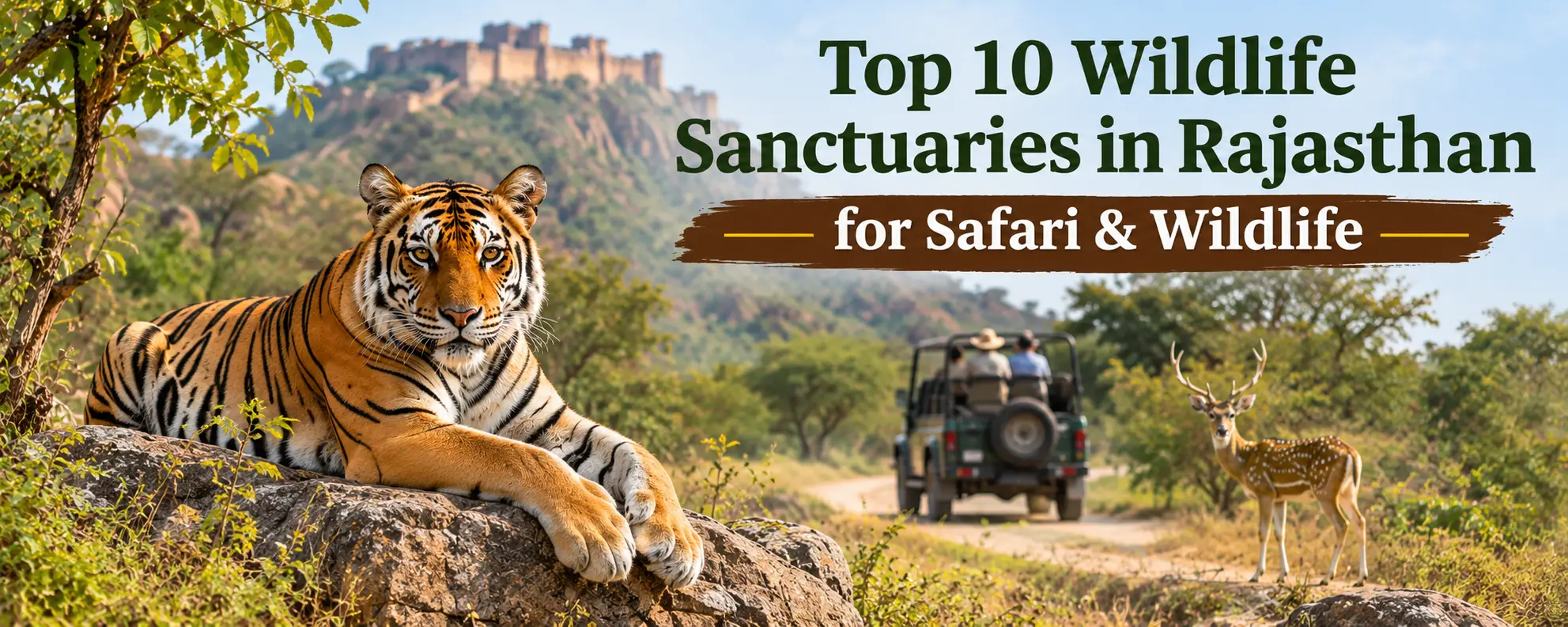
Rajasthan is known for its forts, palaces, desert towns and historic cities, but the state also has an important network of protected wildlife areas. From tiger habitats in Ranthambore and Sariska to the bird-rich wetlands of Bharatpur and the desert grasslands of Jaisalmer, visitors can experience several types of wildlife within one state.
The wildlife sanctuaries in Rajasthan protect different ecosystems, including dry deciduous forests, Aravalli hills, wetlands, grasslands, river habitats and the Thar Desert. These areas support tigers, leopards, blackbucks, chinkaras, sloth bears, crocodiles, gharials and hundreds of bird species.
Rajasthan's wildlife destinations are not all the same. Some offer organised Jeep and Canter safaris, while others are better suited to birdwatching, nature walks or authorised boat trips. Choosing the right destination depends on the animals you want to observe, the time available and the type of experience you prefer.
This guide covers ten important wildlife destinations, their main attractions, suitable visiting seasons, safari options and travel arrangements. It also explains how to plan a Rajasthan wildlife safari and combine different destinations in a road trip.
Planning a wildlife trip in Rajasthan? Call or WhatsApp Raj Travels to discuss vehicles, pickup time and fare.
Call NowWhatsApp UsHow Many Wildlife Sanctuaries and National Parks Are There in Rajasthan?
Rajasthan has three national parks, 26 wildlife sanctuaries and five tiger reserves, according to the state information reviewed for this guide. It also has several conservation reserves that protect important habitats and wildlife corridors.
These categories are different:
- National Park: A protected area established for wildlife and habitat conservation under the applicable wildlife laws.
- Wildlife Sanctuary: A protected area where wildlife and natural habitats receive legal protection, subject to permitted activities and regulations.
- Tiger Reserve: A larger conservation unit with core and buffer areas for tiger protection. It may include national parks and wildlife sanctuaries.
- Conservation Reserve: An area notified to protect habitats, corridors or wildlife outside certain traditional protected-area categories.
Some popular destinations are described as national parks or sanctuaries in tourism searches, even when their legal category is different. For example, Jawai is known as a leopard conservation reserve, while Jhalana is a leopard conservation reserve within Jaipur.
The distinction matters when checking entry permits, safari availability and the authority responsible for visitor access.
Top 10 Wildlife Sanctuaries in Rajasthan for Safari and Wildlife Viewing
The following destinations offer a range of wildlife experiences. The selection includes national parks, wildlife sanctuaries, tiger reserves and conservation reserves because travellers commonly compare all of them when planning a wildlife holiday.
1. Ranthambore National Park – Best for Tiger Safari
Location: Sawai Madhopur
Main wildlife: Bengal tiger, leopard, sloth bear, sambar deer, chital, crocodile and many bird species.
Best visiting period: October to June for the main tourism season, subject to the current operating calendar.
Ranthambore National Park is one of India's best-known tiger destinations. It is particularly popular with visitors who want to see Bengal tigers in a natural forest environment. The park also has lakes, rocky hills, dry deciduous forests and the historic Ranthambore Fort.
The combination of forest habitat, water bodies and open tracks makes the area suitable for wildlife observation and photography. Tigers are the main attraction, but visitors may also encounter leopards, spotted deer, sambar, langurs, wild boars and crocodiles.
Safari Experience at Ranthambore
Visitors generally choose between two authorised vehicle types:
- Gypsy: An open 4x4 vehicle suitable for smaller groups.
- Canter: A larger open safari vehicle that accommodates more visitors.
The park has designated safari zones and routes. Availability depends on the booking date, vehicle category and applicable Forest Department rules.
Travel Tips
- Book popular dates well in advance.
- Check the zone and vehicle details on your permit.
- Reach the reporting point before the scheduled departure.
- Consider staying in Sawai Madhopur for an early morning safari.
- Do not expect a guaranteed tiger sighting.
Ranthambore is a suitable choice for first-time wildlife travellers who want an organised forest safari.
2. Sariska Tiger Reserve – Wildlife Near Alwar
Location: Alwar district
Main wildlife: Tiger, leopard, sambar, chital, nilgai, wild boar and various bird species.
Best visiting period: October to June, subject to current safari operations.
Sariska Tiger Reserve is an important wildlife destination in the Aravalli hills of northeastern Rajasthan. Its dry deciduous forests, rocky hills and open valleys provide habitat for several mammals and birds.
The reserve is known for its tiger conservation programme. Tigers were reintroduced after the local population disappeared, making Sariska an important example of wildlife restoration.
Visitors can also explore the wider area around the reserve, which includes historic structures, temples and scenic forest routes.
Safari Experience at Sariska
Safari drives generally operate in authorised vehicles such as Gypsies and Canters, depending on the available booking options. The route and entry gate depend on the confirmed permit.
Visitors should check whether their booking is for the Sariska Main Gate or another permitted access point. Some safari arrangements may also be available around different parts of the reserve.
Why Visit Sariska?
- Suitable for a wildlife trip from Jaipur or Delhi.
- Known for its tiger conservation work.
- Offers forest and hill habitats.
- Can be combined with Alwar sightseeing.
- Suitable for families interested in wildlife and heritage.
Sariska is a good option for travellers who want a forest safari without travelling as far as some other Rajasthan wildlife destinations.
Need a comfortable cab for your Rajasthan wildlife trip? Share your travel details and we will suggest the right vehicle.
Call NowWhatsApp Us3. Keoladeo National Park – Best Bird Sanctuary in Rajasthan
Location: Bharatpur
Main wildlife: Painted stork, pelican, heron, egret, duck, crane, kingfisher, python and other wetland species.
Best visiting period: November to February for winter birdwatching.
Keoladeo National Park, also known as Keoladeo Ghana National Park, is one of India's most important wetland bird habitats. It is a UNESCO World Heritage Site and attracts resident as well as migratory birds.
Unlike tiger reserves, this park is mainly associated with birdwatching. Its wetlands, grasslands, woodland patches and shallow water bodies create habitats for a wide range of bird species.
During the winter season, visitors can observe waterfowl and other migratory birds. The park is also suitable for photographers and nature enthusiasts who prefer a slower wildlife experience.
How to Explore Keoladeo National Park
Visitors can explore the park through:
- Walking along permitted routes.
- Renting a bicycle.
- Hiring a cycle rickshaw with a trained driver-guide.
- Using other authorised visitor arrangements, where available.
A cycle rickshaw can be useful for visitors who want assistance in locating birds and understanding their behaviour.
Best Time for Birdwatching
November to February is generally a good period for migratory bird activity. The exact species and numbers vary according to rainfall, water levels and seasonal conditions.
Keoladeo is the best choice for travellers whose main interest is bird photography rather than a big-cat safari.
4. Desert National Park – Best for Desert Wildlife
Location: Jaisalmer and Barmer districts
Main wildlife: Great Indian Bustard, chinkara, desert fox, desert cat and several desert bird species.
Best visiting period: October to March.
Desert National Park protects a large section of the Thar Desert ecosystem. Its habitat includes sand dunes, rocky patches, grasslands, scrub vegetation and open plains.
The park is especially important for the Great Indian Bustard, locally known as Godawan. This critically endangered bird depends on open grassland and desert habitat. Sudasari is an important conservation area associated with its protection.
Visitors interested in desert wildlife can explore permitted areas with suitable local or forest guidance. Access is not unrestricted throughout the protected area, so the entry location and route should be confirmed before travelling.
What Can Visitors See?
- Great Indian Bustard, subject to natural sightings.
- Chinkara.
- Desert fox.
- Desert birds and raptors.
- Native desert vegetation and grassland habitat.
A wildlife visit here is different from the commercial Jeep rides at Sam Sand Dunes. Dune activities are leisure experiences, while the national park visit focuses on wildlife and habitat conservation.
Travel Tips
- Confirm the permitted visitor area before departure.
- Arrange a suitable vehicle and guide where required.
- Carry water and sun protection.
- Avoid disturbing birds and wildlife.
- Do not enter restricted conservation enclosures.
Desert National Park is particularly suitable for visitors interested in birds, desert ecology and wildlife photography.
Get Your Exact Taxi Fare
Share your route and preferred vehicle to receive a confirmed quotation.
5. Tal Chhapar Wildlife Sanctuary – Best for Blackbuck
Location: Churu district, near Sujangarh
Main wildlife: Blackbuck, harriers, eagles, falcons, larks and other grassland birds.
Best visiting period: September to March.
Tal Chhapar Wildlife Sanctuary is a well-known grassland habitat in Rajasthan. It is particularly popular for blackbuck observation and birdwatching.
Unlike forest reserves with dense vegetation, Tal Chhapar has open grassland with scattered trees. This makes it easier to observe animals moving and feeding across the open area.
Blackbuck are the main attraction. Their movement across the grassland provides good opportunities for wildlife photography. The sanctuary also attracts birds of prey, especially during the cooler months.
What Makes Tal Chhapar Different?
- Open grassland habitat.
- Good opportunities to observe blackbuck.
- Important area for resident and migratory birds.
- Suitable for wildlife photography.
- Smaller area compared with large tiger reserves.
Visitors should check the current entry arrangements and permitted photography rules before travelling.
Tal Chhapar is a suitable choice for people who want a quieter wildlife visit focused on grassland animals and birds.
6. Kumbhalgarh Wildlife Sanctuary – Best for Aravalli Forests
Location: Rajsamand, Pali and Udaipur districts
Main wildlife: Leopard, sloth bear, wolf, hyena, sambar, chital and four-horned antelope.
Best visiting period: October to March.
Kumbhalgarh Wildlife Sanctuary surrounds the forested hills of the Aravalli range and is closely associated with Kumbhalgarh Fort. It protects a large area of forest and hill habitat across parts of southern Rajasthan.
The sanctuary is known for its rugged terrain, wooded slopes and varied wildlife. Leopards are among the important predators of the region, although sightings are not guaranteed.
The area also supports sloth bears, wolves, hyenas and several herbivore species. Its natural surroundings make it suitable for visitors interested in forest ecology and outdoor activities.
Activities Around Kumbhalgarh
Depending on the current permissions and local arrangements, visitors can consider:
- Authorised Jeep excursions.
- Nature observation.
- Birdwatching.
- Guided walks on permitted routes.
- Visits to Kumbhalgarh Fort.
Travel Advice
Kumbhalgarh is often included in itineraries covering Udaipur, Ranakpur and Rajsamand. A private vehicle can make it easier to combine these locations because public transport options may not suit every sightseeing schedule.
7. Mount Abu Wildlife Sanctuary – Best for Hill Forests
Location: Sirohi district
Main wildlife: Leopard, sloth bear, hyena, jungle cat, langur, wild boar and several bird species.
Best visiting period: October to March for comfortable weather.
Mount Abu Wildlife Sanctuary protects a section of the Aravalli hills around Rajasthan's only major hill station. The area has forested slopes, rocky outcrops, valleys and a variety of plant species.
Its cooler conditions and hill vegetation make it different from the dry forest and desert habitats found elsewhere in Rajasthan.
Leopards are among the important mammals recorded in the region. Other wildlife includes sloth bears, hyenas, jungle cats and different species of birds.
What Can Visitors Do?
Mount Abu is suitable for combining nature visits with regular sightseeing. Visitors can explore permitted forest areas, enjoy scenic drives and visit nearby attractions such as Nakki Lake, Guru Shikhar and Dilwara Jain Temples.
However, not every forest track is open for independent visitor access. Follow local rules and use authorised guidance where required.
Mount Abu is a good option for travellers who want a hill-station holiday with opportunities for nature observation.
8. National Chambal Sanctuary – Best for Gharial and River Wildlife
Location: Along the Chambal River, across parts of Rajasthan, Madhya Pradesh and Uttar Pradesh.
Main wildlife: Gharial, mugger crocodile, Gangetic river dolphin, turtles and river birds.
Best visiting period: November to March, depending on local conditions and boat operations.
National Chambal Sanctuary protects important river habitat and is known for its gharial conservation work. The river also supports mugger crocodiles, turtles, Gangetic river dolphins and several bird species.
This destination offers a different type of wildlife experience because the main activity is usually a guided boat excursion rather than a forest Jeep safari.
What Can You See During a Chambal Visit?
Depending on the location and conditions, visitors may observe:
- Gharials resting on riverbanks.
- Mugger crocodiles.
- River birds.
- Turtles.
- Gangetic river dolphins in suitable stretches.
The exact wildlife seen during a boat trip depends on water levels, season, visibility and animal movement.
Important Travel Advice
Use authorised boat operators and follow safety instructions. Do not attempt to approach crocodiles, gharials or other wildlife. Photography should be carried out without disturbing animals.
National Chambal Sanctuary is a strong option for visitors who have already experienced a forest safari and want to explore river wildlife.
9. Jawai Leopard Conservation Reserve – Best for Leopard Safari
Location: Pali district, around Bera and Jawai Bandh.
Main wildlife: Leopard, crocodile, chinkara and several bird species.
Best visiting period: October to March for comfortable weather.
Jawai is one of Rajasthan's best-known leopard-viewing destinations. Its rocky granite hills provide natural shelter for leopards, while villages and livestock areas form part of the wider human-wildlife setting.
Unlike a traditional national park with fixed numbered tourism zones, Jawai safari arrangements are generally organised through local operators and resorts, subject to permitted access and current rules.
What Makes Jawai Special?
- Leopard habitat among rocky granite hills.
- Wildlife observation with local guides and trackers.
- Scenic surroundings near Jawai Dam.
- Birdwatching around water bodies.
- Accommodation options ranging from camps to resorts.
Leopard sightings are not guaranteed. Visitors should choose operators who follow wildlife rules and do not use baiting, artificial lighting or other harmful practices.
Jawai is technically a leopard conservation reserve rather than a conventional wildlife sanctuary, but it is one of the most popular wildlife experiences in Rajasthan.
10. Jhalana Leopard Conservation Reserve – Best for a Short Jaipur Safari
Location: Jaipur
Main wildlife: Leopard, nilgai, striped hyena, deer and birds.
Best visiting period: October to March for comfortable weather.
Jhalana Leopard Conservation Reserve is a convenient wildlife destination for visitors staying in Jaipur. Its location within the city makes it possible to include a safari without planning a long road journey.
The reserve is known for its leopard population and dry deciduous forest habitat. Visitors may also observe nilgai, striped hyenas, deer and different bird species.
Safari Experience at Jhalana
The safari generally takes place in an authorised open Gypsy or another approved vehicle, depending on current booking options.
Visitors can choose a morning or evening shift when available. Timings and charges may change according to the season and booking arrangements.
Why Visit Jhalana?
- Easy access from Jaipur hotels and airport.
- Suitable for a half-day wildlife outing.
- Useful for visitors with limited travel time.
- Opportunity to observe leopards near a major city.
- Can be combined with Jaipur sightseeing.
Jhalana is a practical option for travellers who want a wildlife experience without travelling to Sawai Madhopur or Alwar.
Other Wildlife Destinations Worth Considering
The ten destinations above cover a range of visitor interests, but Rajasthan has several other protected areas worth knowing about.
Mukundara Hills National Park and Tiger Reserve
Located around Kota and parts of the neighbouring districts, Mukundara Hills is an important protected forest area. Tigers have been relocated here as part of conservation efforts, although visitors should not expect sightings.
Ramgarh Vishdhari Tiger Reserve
Located mainly in the Bundi region, this reserve forms part of Rajasthan's wider tiger conservation network. It also supports leopards, sloth bears, hyenas and other forest wildlife.
Sitamata Wildlife Sanctuary
Sitamata Sanctuary lies across parts of southern Rajasthan and is known for its forest habitat. It supports flying squirrels, leopards, wild cats, sambar and other species.
Kumbhalgarh and Todgarh-Raoli Region
These protected forest areas are useful for visitors interested in Aravalli wildlife, trekking and birdwatching. Access arrangements should be checked before planning an excursion.
Which Are the Best Wildlife Sanctuaries in Rajasthan for Different Interests?
Not every wildlife destination offers the same type of safari. Use this comparison to select a suitable place.
| Wildlife interest | Recommended destination |
|---|---|
| Tiger safari | Ranthambore National Park |
| Tiger safari near Alwar | Sariska Tiger Reserve |
| Birdwatching | Keoladeo National Park |
| Great Indian Bustard | Desert National Park |
| Blackbuck | Tal Chhapar Sanctuary |
| Leopard safari | Jawai Leopard Conservation Reserve |
| Leopard safari near Jaipur | Jhalana Leopard Conservation Reserve |
| Gharial and river dolphins | National Chambal Sanctuary |
| Aravalli forest wildlife | Kumbhalgarh Wildlife Sanctuary |
| Hill forest and nature visits | Mount Abu Wildlife Sanctuary |
This comparison is based on the main wildlife interest associated with each destination. It is not a ranking of animal-sighting probability.
What Is the Best Time to Visit Wildlife Sanctuaries in Rajasthan?
October to March is generally a comfortable period for visiting many wildlife destinations in Rajasthan. The weather is cooler, making road journeys, sightseeing and outdoor activities easier.
However, the best season depends on the type of wildlife experience.
October to March
This is a useful period for:
- Keoladeo birdwatching.
- Tal Chhapar bird and blackbuck observation.
- Jawai leopard safari.
- Kumbhalgarh forest visits.
- Mount Abu nature trips.
- Desert wildlife tours.
April to June
Summer can be hot, particularly in desert and dry forest areas. Visitors planning a safari should check operating schedules and consider early morning activities where available.
July to September
Monsoon conditions can affect forest tracks and visitor access. Some parks and safari zones have seasonal closures or restrictions. Confirm the latest operating calendar before booking.
How to Book a Rajasthan Wildlife Safari?
The booking process depends on the destination and type of activity. Tiger reserves, bird parks, conservation reserves and river safaris may follow different systems.
Step-by-Step Booking Process
- Select the wildlife destination.
- Check the official visitor information and current operating dates.
- Confirm the safari type, such as Gypsy, Canter, boat or guided nature visit.
- Check available dates and shifts.
- Enter the required visitor details.
- Review the applicable entry and vehicle charges.
- Complete payment through the official or authorised booking channel.
- Save the permit and follow the reporting instructions.
For destinations such as Ranthambore and Sariska, use the current Rajasthan Forest Department booking arrangements. Some other locations may have different local access procedures.
What Details Should You Check Before Paying?
- Correct park or sanctuary name.
- Entry gate and reporting location.
- Safari date and shift.
- Vehicle type and passenger capacity.
- Entry fee and additional charges.
- Cancellation and refund conditions.
- Identification requirements.
Avoid websites that promise guaranteed tiger or leopard sightings. No responsible safari operator can control the movement of wild animals.
Rajasthan Wildlife Safari: Gypsy, Canter, Boat or Nature Visit?
The right activity depends on the protected area.
| Safari or activity | Suitable destination | Main purpose |
|---|---|---|
| Gypsy safari | Ranthambore, Sariska, Jhalana and selected other areas | Forest wildlife observation |
| Canter safari | Ranthambore and selected reserves | Group wildlife viewing |
| Birdwatching by cycle or rickshaw | Keoladeo National Park | Wetland bird observation |
| Boat safari | National Chambal Sanctuary | River wildlife observation |
| Local guided wildlife drive | Jawai and permitted desert areas | Leopard or desert wildlife observation |
| Nature walk | Selected permitted forest areas | Plants, birds and habitat observation |
Not every activity is available at every destination. Check the current visitor rules before making a booking.
How to Plan Rajasthan Wildlife Tour Packages?
A wildlife holiday can be organised around one reserve or several destinations. The right itinerary depends on how much time you have and which animals you want to observe.
3-Day Ranthambore Wildlife Trip
Day 1: Arrive in Sawai Madhopur and check into your hotel.
Day 2: Take a morning or afternoon safari. Keep the rest of the day free for rest or local sightseeing.
Day 3: Enjoy another available safari if your schedule permits, then continue your onward journey.
4-Day Jaipur and Sariska Wildlife Trip
Day 1: Arrive in Jaipur and explore selected city attractions.
Day 2: Travel to Sariska and stay near the reserve.
Day 3: Complete a safari and explore permitted nearby attractions.
Day 4: Return to Jaipur.
5-Day Jaisalmer and Desert Wildlife Trip
Day 1: Arrive in Jaisalmer.
Day 2: Explore the city and historic attractions.
Day 3: Plan a permitted visit to Desert National Park and its wildlife areas.
Day 4: Visit Sam or Khuri Sand Dunes for desert activities.
Day 5: Continue your onward journey.
6-Day Rajasthan Wildlife and Heritage Trip
A longer trip can combine different habitats:
- Jaipur and Jhalana.
- Sariska and Alwar.
- Ranthambore and Sawai Madhopur.
- Bharatpur and Keoladeo.
The route should be planned according to road distances and safari availability. Avoid adding too many reserves to a short trip because wildlife visits often require early reporting and overnight stays.
Rajasthan Wildlife Trip by Car: Which Vehicle Should You Choose?
A Rajasthan wildlife trip by car is practical when you want to visit more than one destination or travel with family. Private road transport also helps when safari reporting points are outside the main city.
Choose your vehicle according to the number of passengers, luggage and total distance.
| Vehicle type | Suitable for |
|---|---|
| Sedan | Couples and small families |
| SUV | Families and small groups |
| Innova Crysta or Hycross | Family trips with additional luggage |
| Force Urbania | Larger families and small groups |
| Tempo Traveller | Group wildlife holidays |
| Mini Bus | Larger tour groups |
For long journeys, consider seating comfort, luggage space, driver experience and rest stops. If your itinerary includes multiple parks, plan overnight stays close to the next safari location.
A private road vehicle is used for travel between cities and accommodation. It does not replace the authorised safari Gypsy, Canter or boat required inside a protected area.
How Can Raj Travels Help You Plan a Rajasthan Wildlife Tour?
Raj Travels can help organise road transportation for wildlife holidays across Rajasthan. Whether you are planning a short Jaipur safari or a multi-city wildlife trip, you can enquire about a suitable vehicle according to your itinerary and group size.
Services and Benefits Offered by Raj Travels
- 24/7 Customer Support: Assistance with travel enquiries and booking coordination.
- Private Car Rental: Sedan and SUV options for couples and families.
- Outstation Taxi: Transportation between Jaipur and wildlife destinations.
- Group Transportation: Tempo Traveller, Force Urbania and bus options.
- Wildlife Tour Packages: Assistance with planning multi-day wildlife routes.
- Local Sightseeing: Combine wildlife visits with nearby forts, cities and attractions.
- Experienced Drivers: Drivers familiar with Rajasthan road routes.
- Flexible Travel Plans: Pickup locations and stops arranged according to your itinerary.
Share your travel dates, pickup location, passenger count and preferred wildlife destinations to enquire about suitable transportation.
Visit Raj Travels for Rajasthan taxi and tour arrangements.
Note: Forest entry permits, safari vehicles, guides and boat activities must be booked separately through the applicable official or authorised channels.
Our Fleets for Your Rajasthan Wildlife Trip

- Capacity: 3-4 Passengers
- Luggage: 2 Bags
- Features: AC, Comfortable Seats, Music System

- Capacity: 3-4 Passengers
- Luggage: 2 Bags
- Features: AC, Spacious Boot, Comfortable Drive

- Capacity: 4-6 Passengers
- Luggage: 3-4 Bags
- Features: Reclining Seats, Powerful AC, ABS, Airbags, Touchscreen Display

- Capacity: 6-16 Passengers
- Luggage: Large Hold
- Features: Spacious Cabin, Powerful AC, Comfortable Seats, Large Luggage Space, USB Charging, Safety Features.
Important Tips for Visiting Wildlife Sanctuaries in Rajasthan
A wildlife trip requires preparation, particularly when travelling with children or visiting multiple protected areas.
Before Your Visit
- Confirm the park's current opening dates.
- Book popular safari dates in advance.
- Check the exact entry gate and reporting time.
- Keep original identification documents ready.
- Confirm the total price and included services.
- Arrange accommodation near the reserve if required.
- Check weather and road conditions.
During the Safari
- Follow the guide's instructions.
- Stay inside the authorised vehicle.
- Do not feed or approach wild animals.
- Avoid loud music and unnecessary noise.
- Do not throw plastic or other waste.
- Avoid flash photography where it may disturb wildlife.
- Never ask drivers to chase animals.
- Respect restricted areas and forest rules.
Conclusion
The wildlife sanctuaries in Rajasthan offer very different experiences, from tiger safaris and leopard observation to wetland birdwatching, desert wildlife and river excursions. Ranthambore and Sariska are suitable for visitors interested in tigers, Keoladeo is a strong choice for birdwatching, and Desert National Park is important for the Great Indian Bustard.
Tal Chhapar, Kumbhalgarh, Mount Abu, National Chambal, Jawai and Jhalana add further variety to the state's wildlife tourism options.
Before finalising a trip, check the legal category of the destination, current entry rules, safari availability and travel distance. A well-planned road itinerary can make it easier to explore more than one wildlife area without rushing between locations.
Choose your destinations according to the animals and habitats you want to experience, keep realistic expectations about sightings and follow responsible wildlife tourism practices throughout your journey.
Frequently Asked Questions
Rajasthan has 26 wildlife sanctuaries, three national parks and five tiger reserves, according to state information reviewed for this guide. The categories can overlap because tiger reserves may include national parks and sanctuaries within their larger protected areas.
Ranthambore is a popular choice for tiger safaris, while Sariska is another important tiger destination. Keoladeo is better for birdwatching, Tal Chhapar for blackbuck and Jawai for leopard observation. The best choice depends on the wildlife you want to see.
Ranthambore National Park is one of Rajasthan's best-known tiger safari destinations. Sariska Tiger Reserve is another option. Both offer authorised safari drives, but tiger sightings depend on natural animal movement and cannot be guaranteed.
October to March is generally comfortable for visiting many wildlife destinations. Keoladeo is particularly popular during winter bird migration, while summer visitors often prefer early morning safari shifts. Always check seasonal closures and operating dates before booking.
Tal Chhapar Wildlife Sanctuary in Churu district is particularly known for blackbuck. Its open grassland habitat makes it suitable for observing these antelopes and several bird species, including raptors and harriers, especially during the cooler months.
Jawai Leopard Conservation Reserve and Jhalana Leopard Conservation Reserve are popular destinations for leopard observation. Kumbhalgarh and Mount Abu also support leopard populations. Sightings depend on natural movement, weather, habitat conditions and the permitted safari route.
Keoladeo National Park in Bharatpur is a leading birdwatching destination, especially during winter. Desert National Park and Tal Chhapar are also important for birds, while National Chambal Sanctuary offers opportunities to observe river birds and other aquatic wildlife.
Yes, several popular reserves offer online booking through government or authorised platforms. The process varies by destination and safari type. Check the park, date, shift, vehicle category, visitor details and final charges before completing payment.
Jawai is known as a leopard conservation reserve rather than a conventional wildlife sanctuary. It is popular for guided leopard safaris around rocky hills and villages in the Pali district. Visitors generally arrange safari experiences through local operators and resorts.
Yes. You can combine destinations such as Jaipur, Sariska, Ranthambore and Bharatpur in a multi-day road trip. For longer routes, plan overnight stays near the reserves and confirm safari availability before fixing your transport and hotel schedule.
Still Have a Question?
Share your travel details and our team will get back to you.
Latest Articles
- Jhalana Leopard Safari Jaipur: Booking, Price, Timings & Travel Guide
- Jaipur to Delhi Taxi Fare: Distance, Car Options & Cost
- Force Urbania vs Tempo Traveller: Price, Comfort & Seating
- Wedding Destination in Jaipur: Royal Palaces, Forts and Heritage Venues
- Best Places to Visit During Winter in India
Book your next journey with The Raj Travels – where your comfort is our priority!