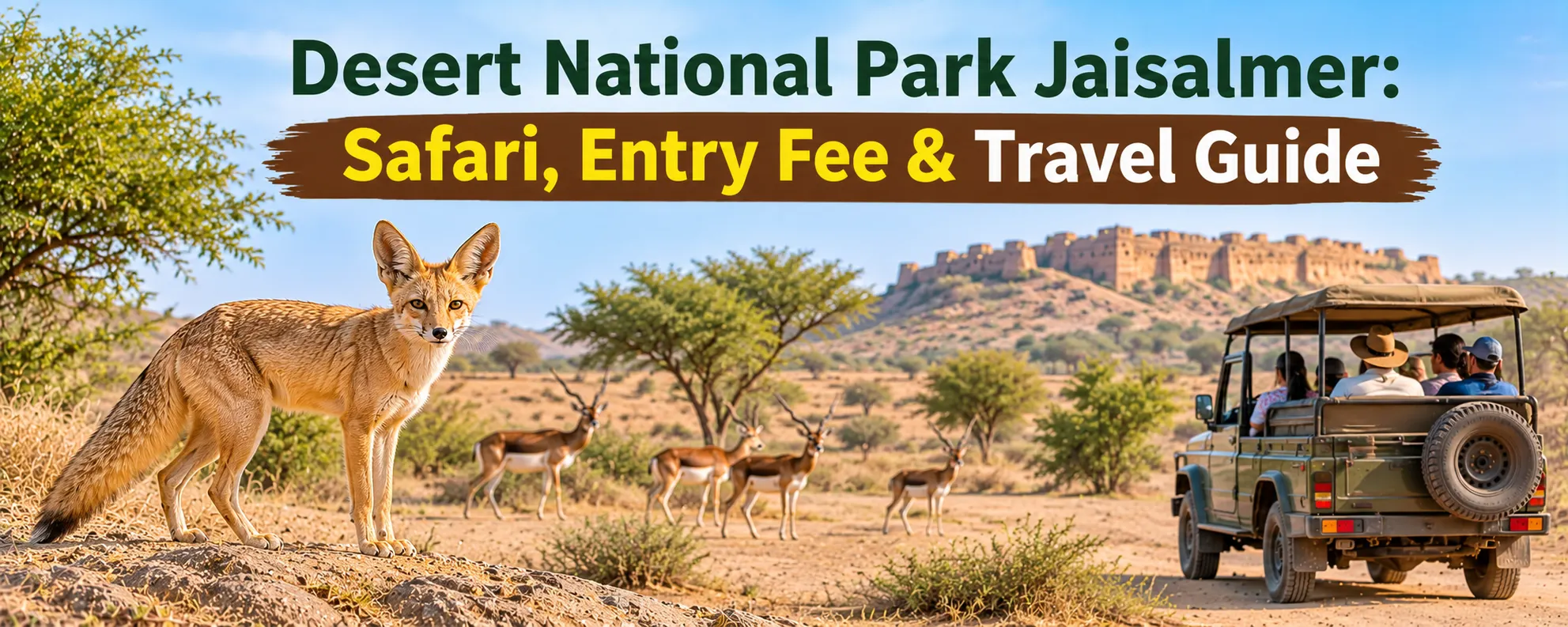
Jaisalmer is widely known for its golden sandstone fort, historic havelis and sand dunes. However, the region also protects one of India's most important desert ecosystems. Desert National Park Jaisalmer is a major wildlife destination in western Rajasthan, known for its open desert habitat, native animals, desert birds and the critically endangered Great Indian Bustard.
The protected area covers parts of Jaisalmer and Barmer districts and offers a different experience from the commercial desert activities around Sam Sand Dunes. Visitors interested in wildlife can explore suitable permitted areas with local guidance, subject to Forest Department rules and access restrictions.
A visit requires some planning because the park is spread across a large area, and not every section is open for general tourism. Entry charges, vehicle fees and private safari arrangements may also be separate. Travellers should confirm the permitted route, current timings and total cost before leaving Jaisalmer city.
This guide covers the Desert National Park safari, entry fee, timings, wildlife, Great Indian Bustard habitat, travel routes, jeep arrangements and practical advice for planning a Jaisalmer wildlife trip.
Need a cab from Jaipur to Jaisalmer? Call or WhatsApp Raj Travels to discuss vehicles, pickup time and fare.
Call NowWhatsApp UsWhat Is Desert National Park Jaisalmer?
Desert National Park Jaisalmer is a protected desert ecosystem in western Rajasthan, extending across approximately 3,162 square kilometres in Jaisalmer and Barmer districts. It was notified as a wildlife sanctuary in 1980 and is an important conservation area for the Thar Desert's native plants and animals.
The Rajasthan Forest Department's management plan identifies the area as a major habitat for desert wildlife. Its terrain includes:
- Sand dunes and inter-dunal plains.
- Dry grasslands and open scrub.
- Rocky patches and gravelly ground.
- Native desert vegetation.
- Seasonal water sources.
- Villages and traditional grazing areas.
The region is particularly important for the Great Indian Bustard, locally known as Godawan. This large, ground-dwelling bird is critically endangered, and the desert habitat around Jaisalmer is one of its important remaining strongholds.
The park is not simply a large stretch of sand. Much of the protected area consists of grassland, scrub and open plains. These habitats support wildlife that has adapted to limited rainfall, high temperatures and changing water availability.
Is It a National Park or Wildlife Sanctuary?
The destination is popularly called Desert National Park, but the Rajasthan Forest Department's management document identifies it as Desert National Park Wildlife Sanctuary and records its notification as a wildlife sanctuary in 1980.
Visitors should follow the Forest Department's current access and permit arrangements rather than assume that every part of the protected area is open for unrestricted sightseeing.
Where Is Desert National Park Located?
The protected area lies in western Rajasthan, mainly across Jaisalmer and Barmer districts. Jaisalmer city is the usual starting point for visitors, with access to different areas through local roads and designated entry points.
Sudasari is an important wildlife-viewing and conservation area associated with the Great Indian Bustard. Sam, Khuri and nearby desert villages are also useful reference points when planning a trip, but they do not all offer the same visitor experience.
Approximate Distance from Jaisalmer City
| Destination or area | Approximate distance from Jaisalmer |
|---|---|
| Sam Sand Dunes | 40–45 km |
| Khuri Sand Dunes | 45–50 km |
| Sudasari area | Approximately 50–60 km |
| Akal Wood Fossil Park | Around 18 km |
| Jaisalmer Fort | Within the city |
Distances depend on the exact starting point and selected route. The road journey to a wildlife entry point may take longer than a trip to the popular dune areas.
Travel tip: Do not use the distance to Sam Sand Dunes as the distance to every wildlife-viewing location. Confirm the exact reporting point before arranging your vehicle.
What Wildlife Can You See in Desert National Park?
The Jaisalmer wildlife safari is mainly about observing desert-adapted animals and birds in their natural habitat. Wildlife sightings depend on season, weather, time of day and the permitted route.
The region supports several species that are well suited to dry conditions.
1. Great Indian Bustard (Godawan)
The Great Indian Bustard is the most important bird associated with the park. It is a large, ground-dwelling bird and one of India's most threatened wildlife species.
The species depends on open grasslands and other undisturbed habitats. Habitat loss, disturbance and collisions with overhead power lines have contributed to its decline.
Sudasari and surrounding protected grassland areas are important for its conservation. Visitors interested in seeing the bird should arrange their visit through appropriate local forest guidance and follow all restrictions.
A sighting is never guaranteed. The bird may remain away from visitor routes or within restricted breeding areas.
2. Chinkara
The chinkara, also known as the Indian gazelle, is one of the characteristic mammals of the Thar Desert. It can survive in dry environments and is often associated with open scrub and grassland.
Its sandy-brown coat helps it blend into the surroundings. Visitors may see it feeding or moving across open ground, depending on the route and conditions.
3. Desert Fox
The desert fox is another interesting mammal of the region. It is adapted to arid conditions and generally avoids the hottest parts of the day.
Seeing one during a daytime visit is not guaranteed, as it may remain hidden in burrows or sheltered areas.
4. Blackbuck and Nilgai
Blackbuck and nilgai are among the other herbivores recorded in the wider desert region. Their presence depends on habitat conditions and local distribution.
5. Desert Birds and Raptors
The park is important for birdwatching, particularly during the cooler months when migratory birds visit Rajasthan.
Bird species recorded in the region include:
- Eagles.
- Harriers.
- Falcons.
- Vultures.
- Bustards.
- Larks.
- Sandgrouse.
- Other grassland and desert birds.
The range of species makes the park relevant to birdwatchers, wildlife photographers and visitors interested in desert ecology.
Desert National Park Safari: What Can Visitors Expect?
A Desert National Park safari is different from a typical tiger-reserve safari. The focus is on observing desert wildlife, birds and natural habitats rather than following a fixed route designed around a single large predator.
Visitors may explore permitted tracks in an authorised vehicle with local or forest guidance, depending on the area and current access arrangements.
A wildlife visit can include:
- Driving through permitted desert tracks.
- Observing open grassland and scrub habitat.
- Looking for chinkara and other desert mammals.
- Birdwatching in suitable areas.
- Learning about the Great Indian Bustard conservation programme.
- Understanding the desert ecosystem and its water sources.
Is a Jeep Safari Available?
A Desert National Park jeep safari may be arranged through local operators where vehicle access is permitted. However, a private Jeep booking does not automatically grant permission to enter restricted forest areas.
Before paying, confirm:
- The exact wildlife area covered by the trip.
- Whether the route requires a Forest Department permit.
- Whether a registered or authorised guide is included or required.
- Whether the vehicle is permitted to enter the selected area.
- The total price and any additional charges.
- Whether the safari is a wildlife visit or a commercial dune ride.
Do not assume that a Jeep safari advertised for Sam Sand Dunes includes entry into the wildlife-viewing areas of the protected reserve.
Desert National Park Entry Fee: How Much Does It Cost?
The Desert National Park entry fee depends on the visitor category and the applicable vehicle charges. Rajasthan's Forest Department issued a revised fee notification effective from 1 April 2026 to 31 March 2028.
Under the notification's category for other sanctuaries and protected areas, the following charges apply.
Official Entry Charges for 2026–2028
| Visitor category | Entry fee per person |
|---|---|
| Indian citizen | ₹165 |
| Foreign citizen | ₹610 |
| Indian student | ₹65 |
Additional Vehicle Entry Charges
| Vehicle category | Entry fee per visit |
|---|---|
| Jeep / Car / Mini-Bus / Canter | ₹370 |
| Bus | ₹550 |
| Two-wheeler / Three-wheeler / E-rickshaw | ₹80 |
These are the notified entry charges for the relevant protected-area category. The final amount applicable to a particular visit should be confirmed with the Forest Department because the route, access point and any special conditions may affect the charges.
Get Your Exact Taxi Fare
Share your route and preferred vehicle to receive a confirmed quotation.
Does the Entry Fee Include a Jeep Safari?
No. The official vehicle entry fee should not be confused with the commercial cost of hiring a safari vehicle.
A private vehicle or local safari operator may charge separately for:
- Vehicle rental.
- Fuel and driver.
- Nature guide or local guide.
- Trip duration.
- Pickup and drop.
- Any additional service arranged by the operator.
Private safari quotations vary. There is no single private Jeep rental price that should be treated as a fixed government safari tariff.
How to Calculate Your Total Visit Cost
Before confirming a trip, ask for a written breakdown covering:
- Entry fee for each visitor.
- Applicable vehicle entry fee.
- Private Jeep or vehicle rental.
- Guide charges, if applicable.
- Pickup and drop charges.
- Any additional service fees.
This makes it easier to compare two offers and prevents confusion between official entry charges and private transport costs.
Important: Some older travel pages still display entry fees of ₹50 or ₹100 for Indian visitors. Check the revised Rajasthan Forest Department notification before using an older price estimate.
Desert National Park Timings: When Can You Visit?
Desert National Park timings depend on the visitor area, access arrangements and current Forest Department instructions.
The Incredible India destination listing publishes general visitor hours of 10:00 AM to 5:00 PM. Some local wildlife operators and travel guides advertise earlier departures for birdwatching and wildlife observation. These schedules should not be treated as interchangeable.
For a wildlife visit, confirm the reporting time and permitted entry window directly with the relevant forest office or authorised operator.
Best Time of Day for Wildlife Observation
Early morning is generally suitable for observing desert wildlife because temperatures are lower and many animals are more active than during the hotter part of the day.
Late afternoon may also be suitable, depending on the permitted route and current operating schedule.
| Time of day | What to consider |
|---|---|
| Early morning | Cooler conditions and useful birdwatching opportunities |
| Late morning | Temperature begins to rise, especially in summer |
| Afternoon | Heat can make wildlife observation less comfortable |
| Late afternoon | May suit selected wildlife routes, subject to permitted timings |
Do not travel to a restricted area before confirming its entry arrangements. Some conservation enclosures may have seasonal closures or access limitations.
What Is the Best Time to Visit Desert National Park Jaisalmer?
The best season depends on your interest in wildlife, birdwatching and weather conditions. October to March is generally the most comfortable period for travelling around Jaisalmer.
October to March: Best for Comfortable Travel
This period usually offers cooler daytime temperatures compared with summer. It is suitable for visitors who want to combine wildlife observation with sightseeing and a desert camp stay.
Winter is also a useful season for birdwatching because migratory birds visit parts of Rajasthan.
April to June: Hot and Dry Conditions
Summer temperatures can become very high in western Rajasthan. Travellers planning a visit during these months should prefer suitable early hours, carry enough drinking water and avoid unnecessary exposure to direct sunlight.
Check whether the intended wildlife route is operating before travelling.
July to September: Monsoon Season
Rainfall is limited and irregular in this part of Rajasthan, but conditions can change. Some tracks may become difficult to access after rain, and certain conservation areas may have seasonal restrictions.
Confirm local conditions and access permissions before planning a trip.
Season-Wise Travel Comparison
| Season | Weather | Travel suitability |
|---|---|---|
| October–November | Generally pleasant | Good for wildlife and sightseeing |
| December–January | Cool mornings and evenings | Suitable; carry warm clothing |
| February–March | Mild to warm | Good for combined travel plans |
| April–June | Very hot | Plan carefully and avoid midday heat |
| July–September | Variable monsoon conditions | Check access and road conditions |
Great Indian Bustard Sanctuary: Why Is Sudasari Important?
The Great Indian Bustard sanctuary is closely associated with conservation work in the Jaisalmer region. The Great Indian Bustard, or Godawan, needs open grassland habitat where it can feed, move and breed without excessive disturbance.
Sudasari is one of the important protected areas for this conservation effort. The Rajasthan Forest Department's management plan describes dedicated enclosures and habitat-management work in the area.
Why Is the Great Indian Bustard Endangered?
The bird faces several serious threats:
- Loss and fragmentation of grassland habitat.
- Disturbance in breeding and feeding areas.
- Collisions with overhead power lines.
- Pressure from development activities.
- Changes in the availability and quality of suitable habitat.
Conservation programmes focus on habitat protection, monitoring, management of protected enclosures and reducing risks to the bird.
Can Tourists Visit the Bustard Breeding Areas?
Not every conservation enclosure is open to visitors. Access may be restricted to protect breeding birds and their habitat.
Some sections of the protected area may also have additional security or administrative restrictions. Foreign visitors planning to visit sensitive areas should contact the Forest Department well in advance to confirm any additional clearance requirements.
Do not attempt to enter fenced or restricted areas without permission.
Desert National Park vs Sam Sand Dunes: What Is the Difference?
Visitors often confuse the wildlife experience with the commercial activities offered around Sam Sand Dunes. Both are associated with the Jaisalmer desert region, but their main purpose is different.
| Feature | Desert National Park wildlife visit | Sam Sand Dunes activities |
|---|---|---|
| Main purpose | Wildlife observation and nature education | Desert adventure and cultural activities |
| Main attractions | Great Indian Bustard, chinkara and desert birds | Camel rides, dune rides and sunset views |
| Experience | Nature-focused | Adventure and leisure |
| Vehicle | Permitted wildlife vehicle, where allowed | Commercial Jeep or camel ride |
| Guide | Forest or authorised local guidance as applicable | Local activity operator |
| Environment | Protected wildlife habitat | Established tourist activity area |
| Main visitor interest | Wildlife and birdwatching | Desert recreation and camp experience |
Which Experience Should You Choose?
Choose the wildlife visit if you are interested in the Great Indian Bustard, desert mammals, birdwatching and conservation.
Choose Sam Sand Dunes if you want a camel ride, commercial Jeep dune ride, sunset photography or an evening cultural programme at a desert camp.
Visitors with enough time can plan both activities on separate parts of the same Jaisalmer trip. Keep the timings and travel distances in mind before combining them.
How to Reach Desert National Park from Jaisalmer?
Jaisalmer city is the most practical base for visitors. From here, travellers can arrange a local taxi or a suitable private vehicle to reach the selected access point.
The route depends on whether you are visiting Sudasari, Sam, Khuri or another permitted area.
By Road
Road travel is the most practical option for reaching the wildlife areas. Some stretches may involve rural roads and tracks, so confirm the exact route before starting.
A suitable vehicle should be selected according to the road conditions and the entry rules of the destination.
By Train
Jaisalmer Railway Station connects the city with other destinations in Rajasthan and selected major cities. Visitors arriving by train can arrange a hotel transfer and continue towards the park by road.
By Air
Jaisalmer has an airport, but flight availability and schedules can vary. Jodhpur Airport is another option for travellers, although the road journey to Jaisalmer is considerably longer.
From Jaipur to Jaisalmer
The distance from Jaipur to Jaisalmer is approximately 560 km by road, depending on the route. The journey generally takes around 10–11 hours, excluding extended stops and traffic delays.
Travellers planning a road trip can book a suitable vehicle according to passenger count, luggage and travel duration.
Jaipur to Jaisalmer Taxi: Which Vehicle Should You Choose?
A Jaipur to Jaisalmer taxi is useful for travellers who prefer a direct road journey without changing trains or arranging multiple transfers.
The right vehicle depends on the number of passengers, luggage and comfort requirements.
| Vehicle type | Suitable for |
|---|---|
| Sedan | Couples and small families |
| SUV | Families and small groups |
| Innova Crysta / Hycross | Families requiring additional seating space |
| Force Urbania | Larger families and small groups |
| Tempo Traveller | Group tours |
| Mini Bus | Larger travel groups |
For a long road journey, consider seating comfort, luggage capacity, driver experience and planned rest stops.
A direct cab can also be useful when the trip includes Jaisalmer sightseeing, Sam Sand Dunes, Khuri and other nearby destinations.
Planning a Jaisalmer wildlife trip from Jaipur? Share your travel details and we will suggest the right vehicle.
Call NowWhatsApp UsOur Fleets for Your Jaipur to Jaisalmer Taxi Journey
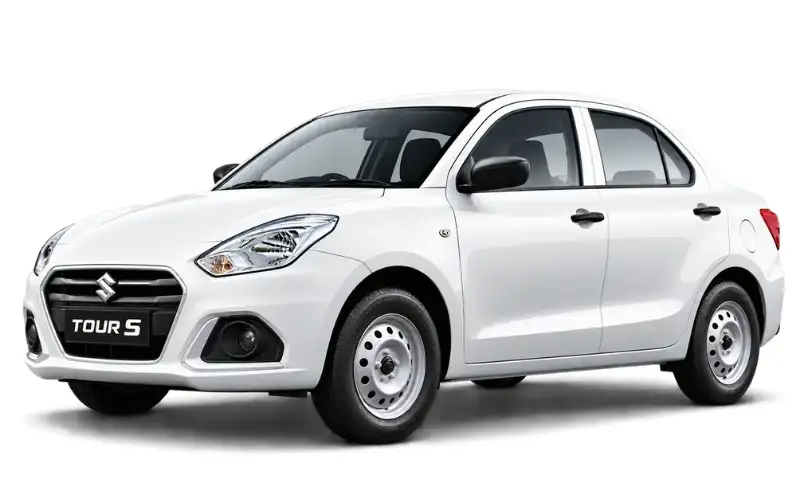
- Capacity: 3-4 Passengers
- Luggage: 2 Bags
- Features: AC, Comfortable Seats, Music System
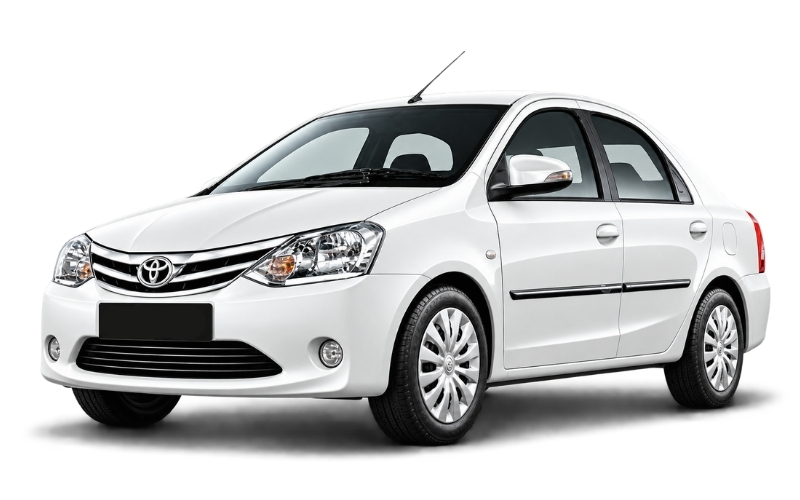
- Capacity: 3-4 Passengers
- Luggage: 2 Bags
- Features: AC, Spacious Boot, Comfortable Drive

- Capacity: 4-6 Passengers
- Luggage: 3-4 Bags
- Features: Reclining Seats, Powerful AC, ABS, Airbags, Touchscreen Display

- Capacity: 6-16 Passengers
- Luggage: Large Hold
- Features: Spacious Cabin, Powerful AC, Comfortable Seats, Large Luggage Space, USB Charging, Safety Features.
Suggested Jaisalmer Wildlife and Sightseeing Itinerary
A two-night or three-night stay gives visitors enough time to explore the city and plan a separate wildlife visit.
Day 1: Arrival and Jaisalmer Sightseeing
- Arrive in Jaisalmer and check into your hotel.
- Visit Jaisalmer Fort.
- Explore Patwon Ki Haveli.
- Visit Gadisar Lake.
- Enjoy an evening at a local restaurant.
Day 2: Desert National Park and Wildlife Visit
- Start according to the confirmed forest reporting time.
- Travel to the authorised wildlife access point.
- Explore the permitted area with the required guide or vehicle.
- Return to the city or nearby accommodation.
- Keep the evening free for rest.
Day 3: Sam Sand Dunes and Departure
- Visit Sam or Khuri Sand Dunes.
- Enjoy a camel ride or a permitted commercial Jeep activity.
- Return to Jaisalmer city.
- Continue with your onward journey.
This itinerary is a planning suggestion. Actual wildlife access and safari timings should be confirmed before fixing hotel check-in, sightseeing and departure schedules.
What Should You Carry for a Desert National Park Visit?
Desert conditions can be challenging, particularly during summer. Carrying a few basic items helps make the visit more comfortable.
Essential Items
- Original photo identification.
- Entry permit or booking confirmation.
- Drinking water.
- Sunglasses and a cap.
- Sunscreen.
- Comfortable closed shoes.
- Light clothing suitable for the weather.
- A jacket during winter mornings.
- Binoculars for birdwatching.
- Camera with sufficient battery.
- Personal medication, if required.
Avoid carrying unnecessary luggage into the wildlife area. Follow the guide's instructions about permitted items and photography.
Important Rules for Responsible Wildlife Tourism
The park protects sensitive desert habitats and endangered wildlife. Visitors should avoid activities that disturb animals or damage the surrounding environment.
Follow these basic rules:
- Do not enter restricted or fenced areas.
- Do not feed wild animals or birds.
- Avoid loud music and shouting.
- Never chase animals for photographs.
- Do not leave plastic bottles or food wrappers behind.
- Follow the route approved by forest authorities.
- Do not use drones without the required permission.
- Avoid unnecessary vehicle movement outside permitted tracks.
- Follow the guide's instructions during wildlife observation.
- Keep a safe distance from all animals.
Responsible travel is particularly important around the Great Indian Bustard habitat. Visitors should never request access to breeding areas simply to get a closer photograph.
How Can Raj Travels Help You Plan Your Jaisalmer Wildlife Tour?
Raj Travels can help arrange road transportation for your Jaisalmer wildlife tour, local sightseeing and travel between Jaipur and Jaisalmer. Visitors can choose a suitable vehicle according to their group size, pickup location and itinerary.
Services and Benefits Offered by Raj Travels
- 24/7 Customer Support: Assistance with travel enquiries and booking coordination.
- Jaipur to Jaisalmer Taxi: Private cab options for direct road journeys.
- Jaisalmer Local Sightseeing Taxi: Transportation for forts, havelis and nearby attractions.
- SUV and Sedan Rentals: Vehicle options for couples and families.
- Group Transportation: Tempo Traveller and bus options for larger groups.
- Desert Tour Packages: Assistance with planning Jaisalmer sightseeing and desert activities.
- Experienced Drivers: Drivers familiar with Rajasthan travel routes.
- Flexible Travel Plans: Pickup times and stops arranged according to the agreed itinerary.
Share your travel dates, pickup location, passenger count and planned destinations to enquire about a suitable vehicle.
Visit Raj Travels for taxi and Rajasthan travel arrangements.
Note: Forest entry permits, wildlife guides and authorised safari arrangements must be confirmed separately with the relevant authorities or authorised local operators.
Conclusion
Desert National Park Jaisalmer is an important destination for visitors interested in desert wildlife, birdwatching and the conservation of the Great Indian Bustard. Its open grasslands, scrub habitat and native species offer a different experience from the commercial camel rides and Jeep activities at Sam Sand Dunes.
Before visiting, confirm the current entry fee, vehicle charges, timings and permitted access area. Arrange the required guide or vehicle through a reliable local source, and keep enough time for the road journey from Jaisalmer city.
Travellers can also combine the wildlife visit with Jaisalmer Fort, local havelis, Sam Sand Dunes and other regional attractions. With suitable transport and a well-planned schedule, the visit can become a useful part of a longer Rajasthan holiday.
Frequently Asked Questions
Under Rajasthan's revised 2026–2028 fee notification, the entry fee for other protected areas is ₹165 per Indian visitor and ₹610 per foreign visitor. A separate vehicle entry charge may apply. Confirm the applicable fee for your route before travelling.
The Incredible India destination listing publishes general visitor hours of 10:00 AM to 5:00 PM. Local wildlife trips may have different reporting arrangements. Confirm the current access time with the Forest Department or authorised operator before leaving Jaisalmer.
The Great Indian Bustard lives in the Jaisalmer desert region, and Sudasari is an important conservation area. Sightings are not guaranteed, and some protected enclosures have restricted access to protect breeding birds and their habitat.
Jeep-based wildlife visits may be arranged in areas where vehicle access is permitted. The vehicle must follow applicable forest rules. Confirm the route, entry permit, guide arrangements and total charges before booking a private Jeep.
October to March is generally comfortable for travel because temperatures are lower than in summer. Early morning is useful for wildlife observation and birdwatching. Visitors should check seasonal access restrictions before planning a trip.
No. Desert National Park is a protected wildlife area, while Sam Sand Dunes is known for commercial camel rides, Jeep rides and desert camps. Both are in the Jaisalmer region, but the activities and visitor arrangements are different.
The distance depends on the selected access point. Sam Sand Dunes are around 40–45 km away, while the Sudasari wildlife area is approximately 50–60 km from the city. Confirm your reporting location before arranging transport.
There is no single fixed private Jeep safari tariff applicable to every operator. The total may include vehicle rental, fuel, guide charges and official entry fees. Request a written price breakdown and confirm which services are included.
A same-day road trip from Jaipur is not practical for most visitors because Jaisalmer is approximately 560 km away. It is better to travel to Jaisalmer, stay overnight and plan the wildlife visit separately.
Foreign visitors should check the current entry rules and any additional security or administrative clearance requirements before travelling. Certain sensitive areas may have restricted access. Contact the Jaisalmer Forest Department well in advance to confirm the applicable process.
Still Have a Question?
Share your travel details and our team will get back to you.
Latest Articles
Book your next journey with The Raj Travels – where your comfort is our priority!